
Leak-Proof Solar Guide for Asphalt Shingle Roofs
Asphalt shingle roofs cover the vast majority of residential buildings globally, from North America to the emerging markets in Southeast Asia. Consequently, they are the most common roof type for residential solar racking systems.
However, the fear of roof leaks remains the #1 barrier for homeowners and EPC contractors. Here is the engineering truth: drilling into a roof does not automatically cause leaks. With a professional-grade flashing system and standardized engineering practices, you can achieve zero leaks for a 25-year lifecycle.
This guide provides a practical, engineering-backed walkthrough on how to secure solar mounts without compromising roof integrity.
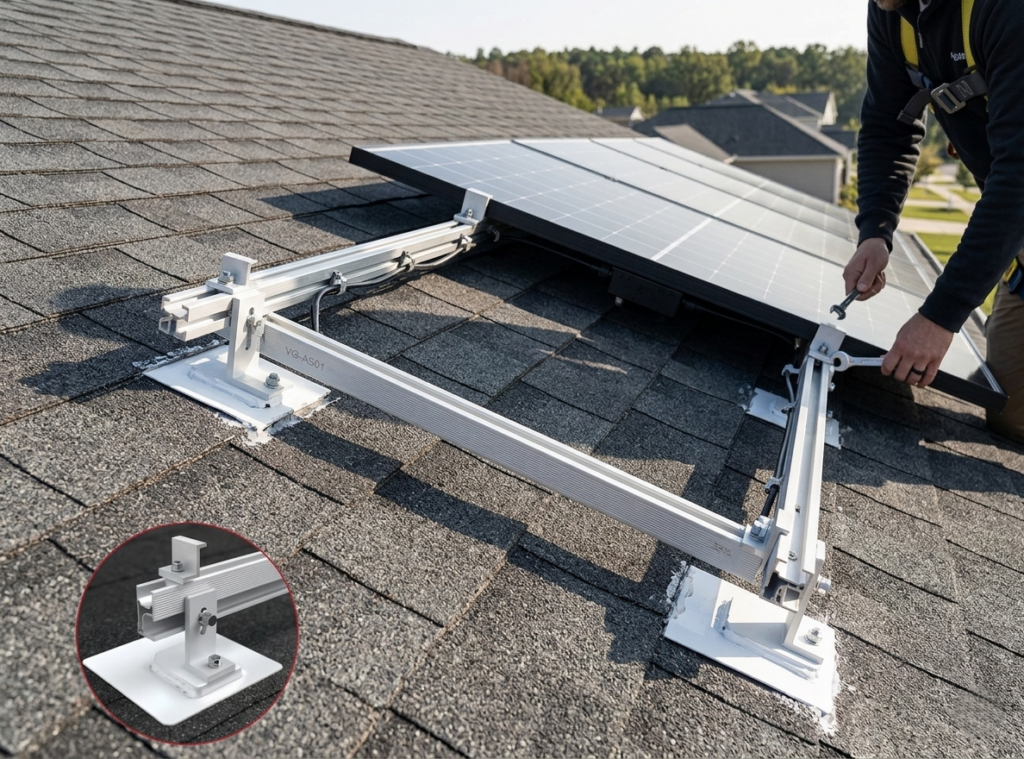
Why Leaks Happen on Asphalt Shingle Roofs with Solar Panels – The Physics of Failure
Most solar-related roof leaks are not caused by the hole itself, but by a failure in water management:
- Capillary Action: Water being pulled into micro-gaps by surface tension.
- Sealant Incompatibility: Using standard silicone that dissolves asphalt or cracks under UV exposure.
- Poor Flashing Integration: Relying on glue instead of gravity-driven metal flashing.
The SolarMountX Principle: We don’t just seal the hole—we redirect water away from the penetration point using physics-based drainage.
Core Materials for a 25-Year Leak-Proof Mount
Quality materials are non-negotiable. Below are the minimum specifications for high-performance solar racking.
| Component | Engineering Specification | SolarMountX Advantage |
|---|---|---|
| Flashing | Galvanized steel or aluminum ≥0.8mm | SMX-Pro Flashing with pre-formed raised diverters |
| L-Foot Gasket | EPDM (70 Shore A), UV-rated 25+ years | High-density EPDM for 120°C heat resistance |
| Sealant | Polymer-based, Asphalt-compatible | Certified UV-resistant solar-grade sealant |
| Fasteners | 316 Stainless Steel or Hot-dip Galvanized | ASTM B117 salt spray tested (1000+ hours) |
Step-by-Step Installation Process for Solar Panels on Asphalt Shingle Roofs (Zero-Leak Standard)
Step 1: Precise Rafter Locating & Structural Alignment
You must anchor lag bolts into the center of the rafters, not just the plywood sheathing.
- Action: Use a high-sensitivity stud finder or measure from the attic interior. Typical spacing varies (16″/24″ in US, or custom spacing in steel-frame structures).
- Why it prevents leaks on asphalt shingle roofs: Accurate centering prevents “side-slipping” where a bolt partially misses the beam, creating an unsealable jagged hole.
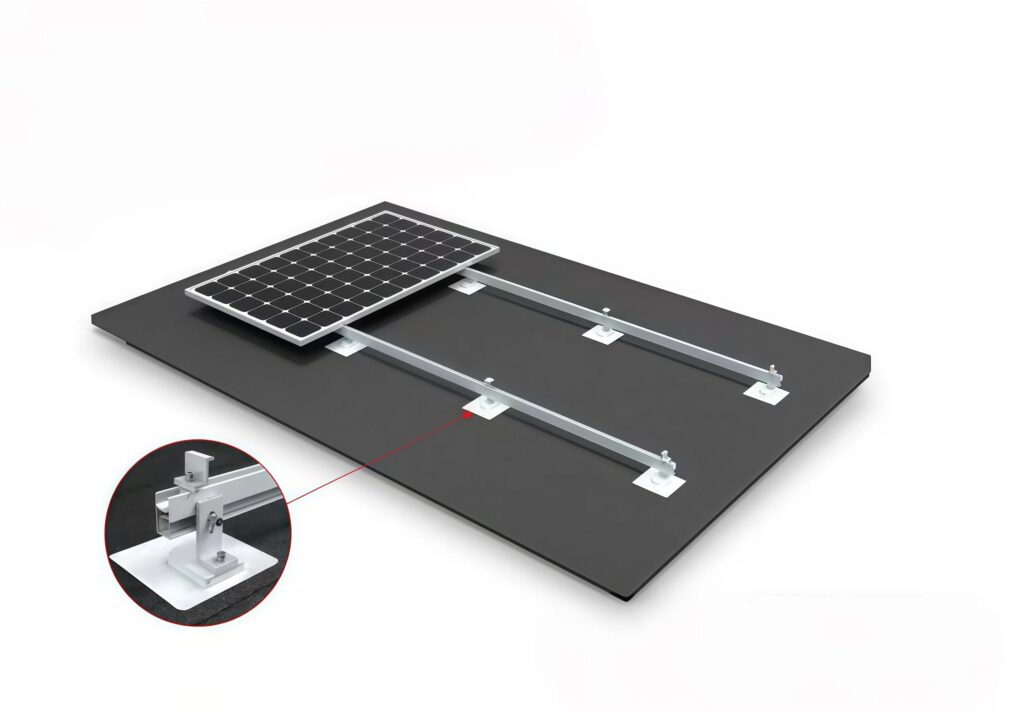
Step 2: Professional Pilot Hole & Debris Removal
- Action: Drill a pilot hole 1/8″ smaller than the bolt diameter. Crucial: Use a brush or blower to remove all asphalt grit and wood chips from the hole.
- Why it prevents leaks: Debris acts as a shim, preventing the EPDM gasket from seating flush against the surface, creating micro-gaps for water intrusion.
Step 3: Mechanical Flashing Integration (The Core)
This is where most DIY attempts fail. You must work with the roof’s layers.
- Lift: Carefully pry the sealant bond of the shingles in the 3rd course above the hole.
- Slide: Insert the SolarMountX Flashing under the upper shingle and over the lower course.
- Inject: Apply a generous bead of asphalt-compatible sealant into the pilot hole and in a “U” shape on the underside of the flashing.
- Secure: Drive the lag bolt through the L-Foot and flashing.
Step 4: Redundant Chemical Seal
- Action: Apply a final bead of sealant around the top of the bolt head and the L-Foot base.
- The Result: You now have Triple Protection: Gravity drainage (Flashing) + Physical seal (EPDM) + Chemical barrier (Sealant).
Climate-Specific Engineering Adjustments
| Climate | Risk | Engineering Action |
|---|---|---|
| Southeast Asia (Monsoon) | High-velocity horizontal rain | Use “High-Profile” flashing with extra-wide lateral coverage. |
| Middle East (Desert) | Extreme UV & Thermal expansion | Use SolarMountX High-Temp EPDM to prevent gasket melting. |
| Coastal Regions | Salt spray corrosion | Upgrade to 316 Stainless Steel fasteners to prevent rust-wicking. |
Asphalt Shingle Roofs & Solar Panels: Common Mistakes That Void Warranties
- Over-tightening: Using an impact driver without torque control can crush the EPDM gasket, causing it to split within 2 years. Use a torque wrench (target: 30–40 in-lb).
- Shingle “Tucking” Errors: Placing flashing on top of all shingles. This creates a dam that channels water directly into the bolt hole.
- Wrong Sealant: Never use “General Purpose” silicone. It will react with the bitumen in the shingles and fail within months.
Engineering Standards & Validation
To ensure a 25-year leak-free life, our systems are tested against:
- ASTM E2140: Standard Test Method for Water Penetration of Metal Roof Panel Systems.
- ASTM B117: Salt Spray (Fog) Testing for fastener longevity.
- TAS 100(A): High-velocity wind-driven rain testing.
Maintenance – The 3-Year Checkup
While designed to be “set and forget,” we recommend a quick visual inspection every 3 years:
- Check for sealant “chalking” or cracking around the L-Feet.
- Ensure no debris (leaves/dust) is trapped under the flashing, which could cause water wicking.
- Inspect the attic ceiling for any signs of moisture after the first major storm post-installation.
Final Summary: Engineering vs. Luck
Installing solar on an asphalt roof without leaks is not a matter of luck—it is a repeatable engineering process. By combining SolarMountX’s specialized hardware with the Triple Seal Method, you protect the building’s structural integrity while harvesting clean energy.
📥 Ready to secure your next project?
[Browse our Asphalt Shingle Mounting Series] Engineered for durability. Tested for the world’s harshest climates.
About the Author
Dr. Yang Ge, PE
Senior Solar Infrastructure Specialist & Corrosion Control Consultant
Dr. Yang Ge is a professional engineer with over 15 years of experience in global renewable energy infrastructure. A specialist in corrosion science and advanced material durability, Dr. Ge has led structural engineering designs for utility-scale solar projects across diverse high-salinity and extreme-climate regions. He is a passionate advocate for long-term asset integrity and is currently focused on optimizing international maintenance standards to secure a 30-year operational life for PV infrastructure.
Published: May 2026