
Off-grid solar system for remote agricultural water pump
Introduction: Why Remote Farms Need an Off-Grid Solar System for Better Water Solutions
A reliable water supply is the cornerstone of any successful farming operation. However, securing power for water pumps in isolated pastures or hillside orchards is a continuous struggle. Extending the utility grid to distant fields is financially impossible—often costing $30,000 to $80,000+ per mile—while relying on diesel generators brings unpredictable breakdowns, carbon emissions, and endless refueling logistics. To overcome these barriers, adopting an off-grid solar system has become the ultimate game-changer for modern agricultural irrigation.
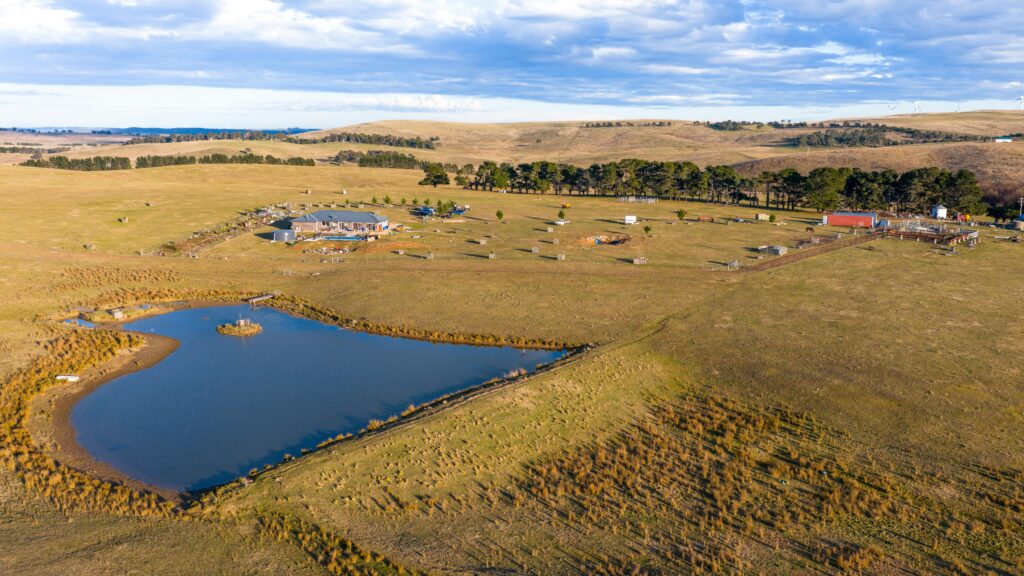
Deploying an off-grid solar system for remote agricultural water pump setups completely eliminates these operational burdens. This complete solar-powered irrigation system transforms free sunlight into a steady stream of power with zero grid reliance. Whether you need a heavy-duty DC submersible pump for deep wells or a surface pump for nearby rivers, solar offers a seamless, automated, and zero-fuel path toward true water independence.
📌 If you are looking for a low-maintenance, cost-effective, and long-lasting farm water supply, this comprehensive guide covers the essential components, accurate sizing workflows, and common installation mistakes to help you deploy a reliable solar pumping system with confidence.
Off-Grid Solar System vs. Diesel Generator vs. Grid Extension: Full Feature Comparison
Before investing in your property’s water infrastructure, review this comparison to see how solar compares to traditional utility and fuel-based power methods in remote agricultural environments.
| Feature | Grid Power Extension | Diesel Generator | Off-Grid Solar Water Pump |
| Initial Investment (CapEx) | Extremely high ($30k–$80k+ per mile) | Low to medium initial cost | Moderate, one-time investment |
| Annual Running Cost (OpEx) | Ongoing monthly electricity fees | High fuel consumption & delivery costs | Zero daily energy costs |
| Maintenance Frequency | Occasional routine checks | Frequent oil, filter changes & engine overhauls | Minimal maintenance (no moving parts) |
| Noise & Environmental Impact | No localized noise or pollution | Loud operational noise & heavy emissions | Silent operation & 100% eco-friendly |
| Lifespan Expectancy | 20+ years | 3 to 5 years (intensive use) | 15 to 25+ years of stable service |
| Power Outage Resilience | Fails completely during grid blackouts | Fully functional as long as fuel is available | Independent; works via sun & water storage |
| Most Suitable Scenarios | Properties near existing infrastructure | Short-term setups or emergency backups | Long-term, autonomous water for remote sites |
Core Conclusion: For the vast majority of isolated agricultural operations, a properly sized solar water pump delivers the highest long-term return on investment (ROI) and the most reliable daily performance.
Main Components of a Standard Solar-Powered Farm Water Pump System
A mature off-grid solar irrigation system consists of four primary components, each engineered to withstand harsh, outdoor agricultural environments.
Solar Panels: The Core Power Source
- Monocrystalline Solar Panels: The industry-standard choice for agricultural irrigation, offering 20% to 22% efficiency. They maintain a stable power output even during low-light conditions like early mornings or overcast skies.
- Bifacial Solar Panels: An excellent upgrade for arrays installed over sandy soil, light-colored dirt, or dry gravel. These panels capture direct sunlight on the front face and reflected ground light (albedo) on the back face, boosting total energy yields by 10% to 25% without requiring extra physical footprint.
📘 Expert Insight: According to research from the [Sandia National Laboratories], deploying bifacial modules over standard agricultural soils provides an automatic 10% to 15% energy gain simply through localized ground reflection.
VFD Solar Pump Controller: The Intelligent Brain
Sunlight intensity shifts constantly throughout the day due to cloud cover and changing sun angles. A standard power supply cannot handle this, but a Variable Frequency Drive (VFD) solar pump controller solves this problem completely, serving as the intelligent brain of your off-grid solar system.
The VFD continuously monitors incoming DC electricity and adjusts the pump motor’s voltage and operating frequency in real time. When sunlight weakens temporarily, the VFD slows the pump’s RPM down instead of shutting it down abruptly. This protects the pump motor from the wear and tear of frequent start-stop cycles while maximizing the total volume of water moved each day.
Two Main Types of Agricultural Solar Water Pumps
| Pump Type | Applicable Scenarios | Power Efficiency | Installation Profile |
| DC Submersible Pump | Deep well or borehole groundwater extraction | Highly efficient; direct DC drive minimizes conversion losses | Installed deep underwater inside the well casing |
| AC Surface Pump | Diverting water from rivers/ponds or long horizontal transfer | Requires an inverter stage to convert DC to AC power | Mounted on the ground adjacent to the surface water source |
Night & Cloudy Day Operation: Water Tanks vs. Battery Storage
To ensure reliable irrigation or livestock watering when the sun isn’t shining, you have two primary infrastructure strategies:
| Storage Mode | Upfront Cost | Daily Maintenance | Ideal Use Case |
| Elevated Water Storage Tank | Low to Moderate | Virtually maintenance-free | Standard farms with adequate space for an elevated reservoir |
| LiFePO4 Battery Bank | High initial investment | Occasional monitoring required | Operations requiring constant line pressure or 24/7 automated drip cycles |
💡 Industry Trend: Most remote farm operators favor the elevated water storage tank approach. Storing water in a tank acts as a “gravity battery”—it eliminates the ongoing replacement and environmental costs associated with chemical batteries while providing flawless reliability.
4-Step Guide to Accurately Size Your Off-Grid Solar System Pump Setup
Sizing mistakes are the leading cause of issues in DIY solar irrigation setups. Undersizing leaves your property dry during heatwaves, while oversizing wastes valuable upfront capital. Follow this systematic engineering approach for an exact match.
Step 1: Calculate Your Total Daily Water Demand
Determine your target daily volume based on peak seasonal needs:
- For Crop Irrigation: Calculate based on your local crop evapotranspiration rates and total acreage.
- For Livestock Ranching: Multiply the per-animal daily drinking requirement by your maximum herd size.
📊 Practical Example: A herd of 50 dairy cows consuming 15 gallons per head each day requires a net target of 750 gallons of water per day.
Step 2: Confirm Total Dynamic Head (TDH)
Total Dynamic Head (TDH) represents the absolute resistance the pump motor must overcome to move water from its source to its destination.
$$\text{TDH} = \text{Vertical Lift} + \text{Static Well Drawdown} + \text{Pipeline Friction Loss}$$
Pipeline friction loss is frequently missed during field planning. Forcing water through long, narrow pipe runs or restrictive elbow joints can double your system’s actual TDH. Always reference a standard friction loss index or an online friction calculator to ensure your pipe diameters match your pump’s flow capabilities.
Step 3: Check Local Peak Sun Hours (PSH)
Peak Sun Hours are different from daylight hours. PSH measures the equivalent number of hours per day when solar irradiance reaches a solid $1,000\text{ W/m}^2$—the threshold required for panels to operate at full rated power.
- Arid Agricultural Regions: $6.0$ to $7.5\text{ PSH}$ per day.
- Temperate/Tropical Regions: $3.5$ to $4.5\text{ PSH}$ per day.
📍 You can access precise, localized historical solar datasets for free via the [NASA SSE Database] or the NREL [PVWatts Calculator].
Once you have your PSH, use this formula to find your required hourly pump performance:
$$\text{Hourly Water Flow Rate} = \frac{\text{Total Daily Water Demand}}{\text{Local Peak Sun Hours (PSH)}}$$
Step 4: Match Pump Power with Solar Array Capacity
With your required flow rate and TDH calculated, select an agricultural pump that matches those specifications. Once the pump’s wattage is established, apply the industry-standard sizing margin:
$$\text{Total Solar Array Capacity} = \text{Pump Rated Power} \times (1.3 \text{ to } 1.5)$$
Building in a 30% to 50% power headroom ensures your system can offset real-world performance drops caused by dust accumulation, extreme summer heat, and intermittent afternoon cloud cover.
Practical On-Site Off-Grid Solar System Application Cases
Our integrated solar pumping configurations support agricultural operations across diverse global climates. Below are two field-verified case studies.
Case Study: Vineyard Drip Irrigation in an Arid Region
| Core Parameter | Field Data & System Specs |
| Location | Central California (Averaging 7.0 Peak Sun Hours/day) |
| Well Dynamics | 120 ft well depth | 160 ft Total Dynamic Head (TDH) |
| Daily Water Requirement | 3,000 gallons / day |
| System Profile | 4.5kW monocrystalline solar array + VFD intelligent controller + AC surface pump |
| Operational Performance | Achieved full ROI within 2.5 years. By using the smart VFD controller to automate irrigation cycles during the early morning hours, the vineyard cut evaporative water loss by 35% compared to overhead sprinklers. The facility operates completely independent of the utility grid, saving over $2,800 annually in diesel and manual labor costs. |
Case Study: Deep-Well Livestock Watering for a Remote Ranch
| Core Parameter | Field Data & System Specs |
| Location | Eastern Colorado (Averaging 6.2 Peak Sun Hours/day) |
| Water Source | 280 ft deep underground borehole well |
| Storage Infrastructure | 5,000-gallon heavy-duty elevated storage reservoir |
| System Profile | High-efficiency ground-mounted bifacial solar panels + DC deep submersible pump + dedicated solar VFD drive |
| Operational Performance | Delivers 365-day automated water with zero fuel consumption. The DC submersible pump consistently tops off the elevated storage tank before 2:00 PM on clear days. Water then feeds down to the livestock pastures via gravity, ensuring the cattle have constant access to water day or night, even through freezing winter conditions. |
5 Typical Sizing and Installation Mistakes in Farm Off-Grid Solar Systems (And How to Fix Them)
❌ Mistake 1: Ignoring pipeline friction loss in hydraulic calculations.
- ✅ Solution: Specify water delivery lines that are at least one size larger than your pump’s discharge outlet, and eliminate sharp 90-degree elbows to keep flow resistance to a minimum.
❌ Mistake 2: Leaving arrays unprotected against dust build-up and lightning strikes.
- ✅ Solution: Set up a simple periodic cleaning routine for dry, dusty regions to prevent a 30% drop in energy harvest. Additionally, always integrate dedicated inline surge protection devices (SPDs) to shield your VFD controller from lightning surges.
❌ Mistake 3: Sizing the entire system based on optimal summer sunshine hours.
- ✅ Solution: Winter sun hours can drop by half compared to summer peaks. Design your array capacity around the minimum sun parameters of your critical growing or breeding windows, and always maintain a minimum 30% solar power margin.
❌ Mistake 4: Allowing partial shadow or shading on the solar array.
- ✅ Solution: Even minor shading on a single solar module can drop the output of an entire wired string by more than 50%. Clear back trees, lines, and brush to guarantee unshaded visibility from 9:00 AM to 4:00 PM year-round.
❌ Mistake 5: Using cheap standard residential pumps for heavy agricultural demands.
- ✅ Solution: Standard residential pumps aren’t built for the variable frequencies and cycling of off-grid solar fields. Always prioritize rugged agricultural pumps engineered with built-in dry-run protection and native VFD compatibility.
Off-Grid Solar System Frequently Asked Questions (FAQ)
Can solar water pumps supply water at night or on heavily overcast days? Yes. You can pump water into an elevated storage tank during the day to enable 24/7 gravity-fed irrigation. Alternatively, add a LiFePO4 battery bank for continuous line pressure, though tanks are more cost-effective.
What is the expected service life of primary components?
- Solar Panels: 25+ years (maintaining 80–85% efficiency).
- VFD Controllers: 10 to 15 years (with proper environmental shading).
- DC Submersible Pumps: 8 to 12 years (with dry-run protection and routine cleaning).
Are formal building and electrical permits required for installation? Usually no. Standalone off-grid solar systems in rural zones rarely require complex utility permits. However, always check local regulations regarding well drilling depth and regional water rights.
How long does it take for a solar irrigation setup to pay for itself? Typically 2 to 4 years for mid-to-large agricultural projects. Once this payback threshold is crossed, your pumping energy costs drop to zero, delivering virtually free water.
Can solar pumps integrate directly with automatic drip irrigation arrays? Absolutely. Our VFD controllers interface seamlessly with timers, float switches, and automated zone valves to run completely unmanned drip irrigation setups.
Can these setups handle extreme desert heat or freezing winter temperatures? Yes. We offer tailored kits with active cooling ventilation for extreme desert heat, and automated low-temperature drain valves to prevent winter frost damage.
Final Takeaway
Investing in an off-grid solar system for remote agricultural water pump setups is a definitive leap toward long-term operational and financial freedom. Once engineered around your local sun exposure and Total Dynamic Head (TDH) metrics, a solar-powered irrigation array will consistently outperform traditional utility grid ties and high-maintenance diesel generators in both service life and hassle-free operation.
Switching to an engineered solar water solution gives your property three undeniable advantages:
- Zero Utility Bills: Complete elimination of grid-dependent monthly pumping power expenses.
- No Fuel Logistics: Absolute freedom from the hazardous and constant hassle of transporting diesel fuel to remote fields.
- Continuous Water Security: Uninterrupted watering schedules for your crops and herds, even during regional grid blackouts.
Don’t leave your agricultural infrastructure to guesswork. Start by defining your daily water volume goals, or let our experienced solar engineering team double-check your hydraulic sizing calculations for you.
We supply complete, field-ready solar water kits—including high-output arrays, heavy-duty mounting structures, industrial VFD controllers, and rugged deep-well pumps—backed by premium global installation support.
👉 Ready to build a reliable farm water supply? Visit Solarmountx today to get your free system design blueprint and hardware quote.
About the Author
Dr. Yang Ge, PE
Senior Solar Infrastructure Specialist & Corrosion Control Consultant
Dr. Yang Ge is a professional engineer with over 15 years of experience in global renewable energy infrastructure. A specialist in corrosion science and advanced material durability, Dr. Ge has led structural engineering designs for utility-scale solar projects across diverse high-salinity and extreme-climate regions. He is a passionate advocate for long-term asset integrity and is currently focused on optimizing international maintenance standards to secure a 30-year operational life for PV infrastructure.
Published: May 2026