
Over a 30-year operational life, ensuring long-term corrosion resistance is far more than a cosmetic concern—it is a critical factor impacting structural integrity, electrical performance, and fire safety. Unmanaged corrosion drives up Solar O&M Best Practices costs, reduces resilience against extreme weather, and can even force premature decommissioning or total structural replacement.
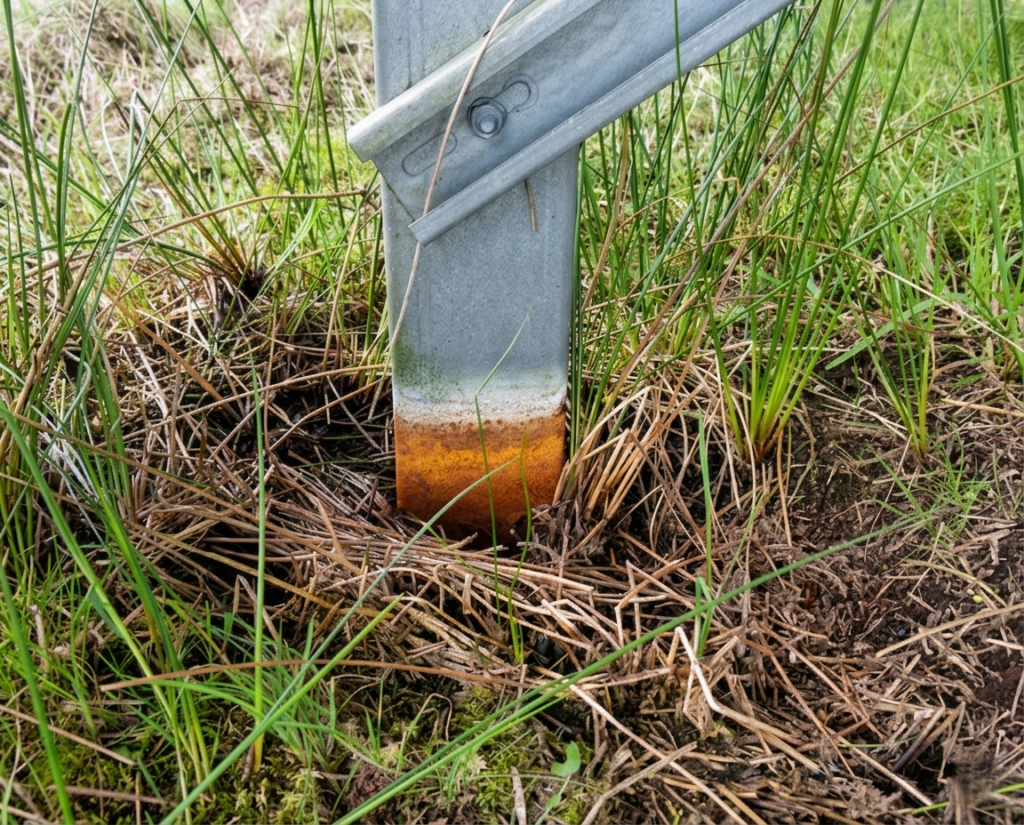
From Corrosion Resistance to Operational Safety: Structural Integrity Risks
While solar mounting systems are designed with a ‘material margin’ to withstand initial surface oxidation, the risks escalate when corrosion moves from the primary beams to critical interfaces:
- Interface Vulnerability: Corrosion tends to concentrate at bolted connections, weld seams, and cut edges where moisture and debris accumulate, creating weak points in the long-term solar structural integrity.
- Fastener Failure: Rust can seize bolts, turning routine maintenance into labor-intensive repairs. Under dynamic wind loads, degraded joints lose friction tolerances, leading to the loosening of critical connections and accelerating structural wear.
- Electrical Hazards: Corrosion compromises grounding continuity by interrupting the metal-to-metal pathway. This increases resistance at terminals and connectors, generating excess heat that can lead to arc faults and elevated fire risks.
Primary Drivers of Corrosion and Materials for Long-term Corrosion Resistance
Most field issues stem from three underlying causes that developers must mitigate during the planning phase:
- Environmental Mismatch: A specification suitable for an inland site is often inadequate for coastal or high-salinity environments. If the protective coating is too thin for the site’s specific corrosivity, the system’s corrosion resistance will fail as the sacrificial layer depletes far sooner than the projected 30-year lifecycle.
- Installation Damage: Even high-quality coatings designed for maximum corrosion resistance can be compromised during transport or assembly. Scrapes from forks, straps, or the process of tightening bolts expose bare steel. Without immediate touch-ups using professional-grade cold galvanizing materials, these points become the ‘ground zero’ for rust propagation.
- Component Incompatibility: Mixing hardware from different manufacturers can introduce dissimilar metals, triggering galvanic corrosion at contact points and severely compromising the solar racking corrosion prevention of the entire system.
Lifecycle Corrosion Resistance: Best Practices for Asset Control
To maintain the structural health of your PV project, we recommend a disciplined approach to asset management:
Rigorous Field Handling and Installation
Protective logistics are essential. Packaging should be designed to minimize impact damage during transit. Materials must be kept off bare ground and away from pooled water during staging to prevent premature oxidation. Furthermore, any exposed bare steel—especially on threads and cut edges—must be treated with high-grade anti-corrosive agents immediately during installation.
Long-term Monitoring and Maintenance
Project owners should implement rigorous spot-checks of coating thickness every five years, comparing results against the original design specifications to track the rate of depletion. Additionally, perform periodic solar O&M best practices audits, specifically targeting electrical connection points. Any sign of heating, discoloration, or loosening at terminals should prompt an immediate inspection and torque verification to prevent system failure.
Frequently Asked Questions (FAQ)
Q: How often should I inspect solar mounting for corrosion? A: We recommend a comprehensive visual inspection annually, with a deep-dive technical audit every five years to ensure your Corrosion Resistance standards remain within design parameters for the project’s lifespan.
Q: What is the most common cause of solar racking corrosion? A: Environmental mismatch is the primary driver. Using standard galvanized steel in high-salinity environments without additional protection leads to rapid depletion of the sacrificial layer, compromising the system’s long-term Corrosion Resistance.
Q: How can I prevent galvanic corrosion in my solar array? A: Galvanic corrosion occurs when dissimilar metals are in contact. Ensure all hardware is chemically compatible. If mixing is unavoidable, use dielectric insulators to maintain the integrity of your Corrosion Resistance strategy and prevent structural failure.
Q: Does minor surface rust affect the 30-year lifespan of my solar project? A: While minor surface oxidation is common, it must be monitored. If rust appears at critical load-bearing joints, it directly impacts safety and must be treated immediately to prevent deeper structural failure.
Conclusion Solar assets achieve their maximum ROI when Corrosion Resistance is treated as a measurable and controllable variable. By combining clear acceptance criteria with disciplined maintenance, developers can safeguard their infrastructure against the elements, ensuring 30 years of safe and efficient energy production.
Explore More & Get Started
Ready to secure your solar project? Discover our complete range of solutions:
- View All Products – Explore our high-performance solar mounting systems.
- Visit Our Homepage – Learn more about our commitment to solar infrastructure.
- Contact Us – Let our experts assist with your specific project needs.
About the Author
Dr. Yang Ge, PE
Senior Solar Infrastructure Specialist & Corrosion Control Consultant
Dr. Yang Ge is a professional engineer with over 15 years of experience in global renewable energy infrastructure. A specialist in corrosion science and advanced material durability, Dr. Ge has led structural engineering designs for utility-scale solar projects across diverse high-salinity and extreme-climate regions. He is a passionate advocate for long-term asset integrity and is currently focused on optimizing international maintenance standards to secure a 30-year operational life for PV infrastructure.