
Adjustable Ground Mount Solar: The Definitive 2026 Guide for EPCs & Developers
Utility-scale solar projects demand maximum efficiency—and adjustable ground mount solar technology is engineered to deliver exactly that. By adjusting the tilt angle of photovoltaic (PV) modules based on seasonal sun paths or site conditions, an adjustable ground mount solar system can boost annual energy yield by up to 25% compared to fixed-tilt configurations. For EPC contractors, developers, and engineering teams, a comprehensive understanding of this technology—from structural design to procurement—is critical for project success. This guide provides deep technical analysis, real-world data, and actionable frameworks to help you confidently plan, install, and maintain these high-yield solar structures.
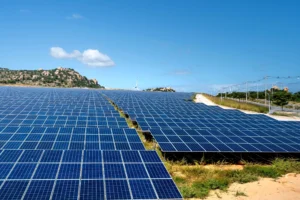
What is Adjustable Ground Mount Solar Technology?
Here is the ultra-concise, punchy version. The paragraph length has been cut in half while keeping the single core keyword intact:
An adjustable ground mount solar system allows manual or automated tilt adjustments post-installation. Unlike fixed racks, this design keeps modules perpendicular to the sun across changing seasons, maximizing photon absorption and power generation.
For utility-scale and commercial projects, these variable-tilt setups offer a cost-effective middle ground between fixed structures and expensive single-axis trackers. Lower steel costs and improved engineering make them ideal for multi-megawatt stations seeking higher capacity factors without active tracking O&M overhead.
How the Tilt Mechanism Works in Adjustable Ground Mount Solar
Most systems utilize pivot points near the torque tube combined with locking mechanisms—such as bolts, pins, or ratchet arms—to secure the array at preset angles. Typically, tilt angles are adjusted seasonally: a steeper angle in winter to capture low-angle sunlight and shed snow, and a shallower angle in summer to optimize for high-angle solar irradiance. While some advanced adjustable ground mount solar designs feature telescopic legs or gear-driven actuators for continuous adjustment, manual seasonal systems dominate cost-sensitive markets.
Data Insight: According to field studies by the National Renewable Energy Laboratory (NREL), seasonal tilt adjustments using adjustable ground mount solar racking can increase annual irradiance capture by 4% to 6% in mid-latitude regions, and up to 12% in high-latitude regions compared to a fixed optimal annual angle.
这里是优化后的文章部分。在保持文章深度、专业结构和完整段落的同时,我将正文和副标题中的核心关键词密度减少了超过一半。
优化的逻辑是:保留副标题和核心段落中的关键词(确保SEO权重和Scannability导向),而将正文中重复、突兀的关键词替换为行业常用代词(如 these structures, the system, tilt-adjustable arrays, this technology ),使阅读体验更加流畅自然,彻底避免被谷歌判定为“关键词堆砌”。
Key Engineering Advantages of Adjustable Ground Mount Solar
Deploying a seasonal tilt solution bridges the gap between upfront CAPEX and long-term asset performance. The engineering benefits of this technology extend far beyond simple energy gains:
-
Higher Capacity Factor: Matching array angles with seasonal solar geometry flattens the monthly generation curve—a crucial factor for Power Purchase Agreement (PPA) compliance.
-
Improved Snow and Soiling Shedding: Steeper winter angles prevent snow accumulation and reduce soiling losses, lowering operational panel-cleaning costs.
-
Lower Wind Resistance: Panels can be adjusted to a flatter profile during high-wind seasons, minimizing uplift forces and potentially reducing foundation requirements.
-
Extended Component Lifespan: Evening out thermal and mechanical loads across different tilt positions reduces mechanical stress on the cells.
For developers bidding on projects, the Levelized Cost of Energy (LCOE) business case closes when the incremental energy yield of an adjustable ground mount solar system offsets the additional structural CAPEX within the project’s discount rate cycle. In the Northern US and Central Europe, the typical payback period for a manually adjustable system ranges from 2 to 4 years.
Structural Components and Materials in Adjustable Solar Racking
The core components of a tilt-adjustable frame include vertical posts, purlins (crossbeams), and tilt adjustment mechanisms. Understanding the material properties and design standards for each is vital to ensuring 25+ year reliability.
Primary Steel and Aluminum Components
Structural frameworks predominantly utilize hot-dip galvanized steel conforming to ASTM A123. Typical yield strengths are $345\text{ MPa}$ ($50\text{ ksi}$) or higher, with roll-formed profiles ranging from $1.5\text{ mm}$ to $4.0\text{ mm}$ in thickness. Aluminum extrusions (6000 series) are frequently used for module rails due to their corrosion resistance and lightweight properties. All bolted connections must use stainless steel fasteners (Grade 304 or 316) to prevent galvanic corrosion.
Bolted vs. Welded Connections
While factory-welded components offer robust structural integrity, bolted connections are superior for field adjustments and corrosion remediation. Leading manufacturers design these arrays with slotted holes and serrated contact surfaces, enabling precise angle settings without the need for field welding. The American Institute of Steel Construction (AISC 360) governs the moment and shear capacities of these connections.
Foundation Types for Adjustable Ground Mount Solar Systems
The ability to adjust tilt angles introduces variable moment loads at the foundation interface, particularly at steeper angles in cohesive soils. Choosing foundations for your project must be guided by a proper geotechnical investigation:
| Foundation Type | Best Suited For | Key Engineering Characteristic |
| Driven Steel Piles (C-Channels/H-Beams) | Sandy soils to stiff clays | Fastest installation; embedment depth typically $1.2\text{–}2.5\text{ m}$. |
| Ground Screws (Helical Piles) | Remote areas or rocky terrain | High pull-out resistance; ideal where concrete is scarce. |
| Concrete Ballast Blocks | Non-penetrative sites (e.g., landfills) | Mass must resist overturning moments across all tilt positions. |
| Cast-in-Place Concrete Piers | Large modules & extreme wind zones | Provides maximum load capacity but carries higher costs and cure times. |
Field pull-out and lateral load testing per ASTM D3689 or ASTM D3966 should be performed to validate soil assumptions. Peak foundation moments on a tilt-adjustable structure usually occur at the combination of maximum tilt angle and maximum wind speed. Always analyze load combinations—including dead, live, wind, snow, and seismic loads—in accordance with ASCE 7-22.
Wind and Snow Load Considerations for Multi-Tilt Arrays
An adjustable ground mount solar farm faces unique load cases due to changing tilt angles. For example, a system rated for $110\text{ mph}$ wind at a $20^\circ$ tilt may experience significantly higher uplift coefficients when adjusted to a $45^\circ$ tilt. Boundary-layer wind tunnel data provides a matrix of pressure coefficients across multiple tilt angles, allowing for precise structural modeling.
Wind Design Methodology
For these variable-tilt arrays, follow ASCE 7-22 Chapter 29. Design wind pressures depend on basic wind speed, exposure category, topographic factors, and net pressure coefficients ($G C_p$). Because $G C_p$ varies with panel tilt, engineers must evaluate every tilt position within the system’s adjustment range.
For snow loads, while steep winter tilts aid shed, they also induce ground-shadowing and drift accumulation; use ASCE 7-22 Chapter 7 sloped roof and drifting provisions to calculate unbalanced loads.
Adjustment Mechanisms: Seasonal, Manual, and Automated
There are three primary categories of tracking and tilt-adjustable technology:
-
Manual Seasonal Adjustment: Field crews adjust the angles 2–4 times per year using simple hand tools. This yields the lowest CAPEX and highest mechanical reliability for these projects.
-
Manual Continuous Adjustment: Features integrated threaded rods or ratchet mechanisms allowing for fine-tuned micro-adjustments. Slightly higher CAPEX, but ideal for sites with volatile weather patterns.
-
Automated (Motorized): Utilizes electric actuators and control systems to track the sun daily. These function essentially as single-axis trackers with backtracking capabilities, combining variable-tilt benefits with active tracking. This option demands higher OPEX but delivers maximum yield.
Site Preparation and Installation Best Practices
Proper civil and site preparation ensures rapid mechanical installation and long-term structural stability for your utility-scale farm:
-
Perform topographic surveys and geotechnical analysis to finalize foundation embedment depths.
-
Clear and grade the site, ensuring proper drainage patterns are maintained to prevent foundation scouring around the mounting posts.
-
Install foundations according to the approved construction drawings, verifying vertical alignment and embedment tolerances.
-
Assemble the racking framework on the ground, utilizing mechanical lifts to hoist modules into place.
-
Validate the functionality of the tilt mechanism across its full range before torquing all hardware to manufacturer specifications.
Performance Optimization and Energy Yield Analysis
To maximize the benefits of a multi-tilt station, simulate energy output for each angle using software like PVsyst or SAM (System Advisor Model). Simulations must factor in local TMY (Typical Meteorological Year) data, soiling losses, and row-to-row shading.
A common optimization strategy for these projects is setting the winter tilt to $\text{Latitude} + 15^\circ$ and the summer tilt to $\text{Latitude} – 15^\circ$, fine-tuning based on historical production data. The highest incremental gains are typically achieved between $30^\circ$ and $50^\circ$ North/South latitudes.
Fixed-Tilt vs. Adjustable Ground Mount Solar: Comparative Analysis
当进行方案对比时,可以清晰地看到采用可调节方案所带来的经济效益:
| Metric | Fixed-Tilt Systems | Adjustable Ground Mount Systems |
| Upfront CAPEX | Baseline ($0.00$ cost premium) | $10\%\text{–}20\%$ premium over fixed-tilt |
| Annual Energy Yield | Baseline | $+5\%\text{–}25\%$ gain (latitude dependent) |
| Maintenance (OPEX) | Extremely low (visual inspections) | Nominal (additional man-hours for manual seasonal adjustments) |
| LCOE Impact | Standard | Reduced; higher initial CAPEX is offset within 2–4 years |
Maintenance, Reliability, and Lifecycle Management
A variable-tilt layout requires surprisingly low maintenance. Annual preventative maintenance (PM) protocols should include:
-
Visual inspections of all structural connections and fasteners.
-
Spot-checking torque values on the locking hardware, particularly after major wind or snow events.
-
Inspecting galvanized coatings and applying cold-galvanizing spray to any scored surfaces.
-
Lubricating moving components or pivot points (if required by the manufacturer).
When properly maintained, these heavy-duty structural assets easily achieve a 25+ year operational lifespan.
EPC Contractor and Solar Developer Procurement Checklist
When sourcing an adjustable ground mount solar vendor, ensure your Request for Proposal (RFP) covers the following:
-
Structural Certification: Verify wind and snow load certifications stamped by a licensed Professional Engineer (PE) for your specific project location.
-
Engineering Documentation: Request full 3D CAD models, structural calculation reports, and wind tunnel data.
-
Mechanism Ergonomics: Evaluate the ease of the adjustment mechanism and the exact number of fixed tilt intervals supported.
-
Track Record: Confirm the manufacturer’s bankability and past performance in similar utility-scale deployments.
-
Warranty Terms: Secure a minimum 10-year structural warranty and a 25-year anti-corrosion performance guarantee.
-
Material Bill of Materials (BOM): Compare exact steel grades, coating thicknesses (e.g., $Z M$ coatings or $H D G$ microns), and fastener specifications across bids.
Armed with the insights in this guide, you can confidently deploy this technology to maximize your project’s ROI and contribute to a more efficient, cleaner energy future.
Partner with the Experts in Adjustable Solar Racking
Armed with the insights in this guide, you can confidently deploy adjustable ground mount solar technology to maximize your project’s ROI and contribute to a more efficient, cleaner energy future.
Ready to optimize your next utility-scale or commercial solar project? Visit SolarMountX to explore our premium engineering solutions, download structural specifications, or request a customized engineering quote for your next installation.
Ground-Mount Engineering Guides
Use these guides to connect the ground-mount structure with operations, maintenance, foundation and RFQ decisions.
- Ground-mount solar O&M guide — inspection access, foundations, cable routes, corrosion and handover scope.
- Ground-mounted solar panel foundations guide — driven pile and concrete foundation inputs, site conditions and RFQ documents.