
Snow Load Solar Racking: 7 Critical Design Factors for 2026 (Heavy Snow Guide)
Deploying photovoltaic (PV) systems in high-latitude and alpine regions requires precise adherence to structural mechanics. For EPC contractors and procurement specialists, maintaining the structural integrity of snow load solar racking systems under heavy snow accumulation is the primary determinant of asset longevity. This technical guide outlines seven critical factors for engineering these systems to withstand heavy snow loads and ensure performance in the harshest winter conditions.
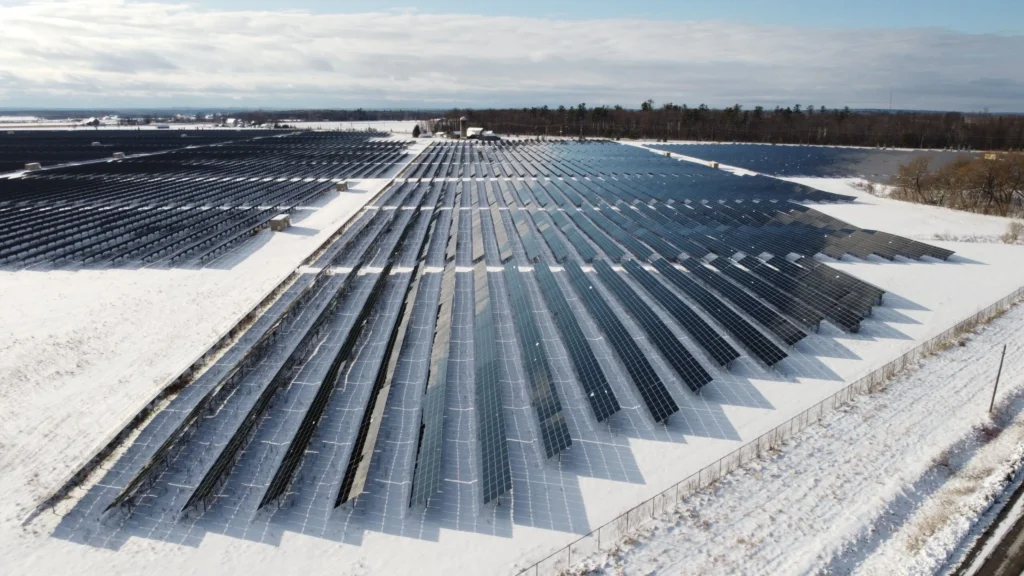
Technical Summary: Snow Load Design Parameters
| Parameter | Technical Requirement | Engineering Standard |
| Load Calculation | 1.8x balanced load (leeward) | ASCE 7-22 (Sec 7.6.1) |
| HSLA Steel | Ductile to -50°C | ASTM A572 Grade 50 |
| Aluminum | 6082-T6 (≥ 310 MPa UTS) | ISO 209-1 |
| Tilt Angle | 35°–45° for shedding | Empirical Data |
| Thermal Gap | ≥ 8mm per 50°C delta | Linear Expansion Coeff. |
Snow Load Solar Racking Classification and Drift Mechanics
Effective design of snow load solar racking begins with the interpretation of site-specific snow load data. Engineers must distinguish between uniform ground deposition and drift accumulation.
- Ground vs. Drift Load: Per ASCE 7-22, drift loads can concentrate weight 300–400% higher than ambient ground loads.
- Importance Factor ($I_s$): Installations powering critical grid infrastructure require $I_s$ values of 1.15 or higher.
- Engineering Resources: For project-specific load capacity tables and validated hardware configurations, visit SolarMountX.
Metallurgy and Cryogenic Performance
Material selection for snow load solar racking in snow-prone regions must account for the Ductile-to-Brittle Transition Temperature (DBTT).
- HSLA Steels: Specify steels such as ASTM A572 Grade 50. Trace elements refine grain structure, lowering the DBTT to approximately -50°C.
- Aluminum Alloys: 6082-T6 is preferred over 6005A-T6 in extreme load scenarios for its superior Ultimate Tensile Strength (≥ 310 MPa).
- Galvanic Isolation: Utilize A2-70 or A4-80 stainless steel fasteners with polymeric isolation pads. Avoid electroplated Grade 12.9 bolts due to hydrogen embrittlement risks.
以下是修改后的文章段落,核心关键词的出现频率减少了两次(相比上一版本),同时保持了专业的技术逻辑:
Structural Geometry and Tilt Optimization
The interaction between snow friction and gravity dictates the shedding capacity of the racking system. Implementing optimal tilt angles is essential for the performance of a snow load solar racking array.
- Shedding Equilibrium: Reliable wet snow shedding typically requires a tilt angle of 40°–45°.
- Standard Metric: A minimum 35° tilt is the standard conservative design metric for continental climates to prevent mass accumulation and subsequent structural failure.
Geotechnical Foundation Engineering for Snow Load Solar Racking
Foundation failure in cold climates is often caused by frost heave or thaw settlement.
- Helical Piles: Offer rapid installation and high uplift resistance; embedment depth must exceed the maximum frost penetration line.
- Concrete Ballast: If used, the mix design must be engineered for high-freeze-thaw durability to prevent cracking and moisture ingress.
Rail Span and Structural Stiffness
Finite Element Analysis (FEA) must be employed to determine optimal support spacing.
- Deflection Limits: Reduce span lengths to increase stiffness. While standard moderate-snow zones may accommodate 1.5m spans, extreme conditions frequently necessitate spans under 1.0m for standard 60-cell modules, which is a key design parameter for such systems.
- Thermal Expansion: A 50°C temperature swing necessitates a minimum expansion gap of 8mm in sliding joints to prevent buckling between the rail and post.
- Component Compatibility: Refer to technical documentation at SolarMountX for standardized rail span capacity ratings under various snow load profiles.
Installation Protocols and Quality Assurance
Structural integrity is voided by improper field execution.
- Torque Calibration: Use only calibrated tools to ensure fasteners meet manufacturer specifications.
- Cold-Weather Lubrication: Use lubricants formulated for low temperatures to prevent galling in stainless steel threading.
Long-Term Resilience and Monitoring
Resilience is a factor of the maintenance lifecycle. Maintaining the long-term integrity of a snow load solar racking system is critical to prevent degradation.
- Post-Winter Audits: Annual structural inspections must occur after the spring thaw to identify frost-induced foundation displacement.
- Anodizing Standards: Ensure components meet AA15 or AA20 anodizing thickness to resist abrasion from cyclic wetting and ice-crystal friction.
Engineering Support for Extreme Climate Projects
Navigating the complexities of high-latitude solar deployment requires precise structural validation and material integrity. If your upcoming project demands specialized snow load capacity analysis, geotechnical engineering consultation, or specific hardware durability specifications, our technical team is prepared to assist.
We provide comprehensive support for EPC contractors and developers to ensure your infrastructure meets the most rigorous safety standards.
Discuss your site-specific requirements with our engineering team today: https://solarmountx.com/