
Ground Mount Solar: 5 Racking System Types (2026 Guide)
When utility-scale developers, EPCs, and residential installers evaluate the most bankable PV solution, ground mount solar consistently rises to the top. Unlike rooftop arrays, a well-engineered ground mount solar racking structure delivers superior energy yield, unrestricted orientation, and decades of low-risk operation. Whether sourcing a complete solar ground mount system for a 50 MW farm or selecting a ground mount solar kit for a rural home, your decisions about design, materials, and installation fundamentally shape the levelized cost of energy (LCOE) and long-term returns. In this comprehensive guide, we examine every layer of ground-mounted PV technology—from structural typologies and geotechnical factors to procurement and maintenance—so you can specify the right solution with confidence.
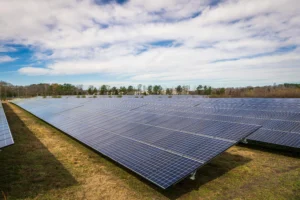
What Is a Ground Mount Solar Racking System?
A ground mount solar racking system is a freestanding support structure that secures photovoltaic modules directly to the earth, independent of any building envelope. It transfers wind, snow, and seismic loads into the ground through driven piles, helical anchors, concrete ballasts, or cast-in-place foundations. The core function is straightforward: hold modules at a precise tilt and azimuth to capture maximum irradiance while protecting the electrical asset for 25 years or more.
Today’s ground mount systems are highly engineered, integrating corrosion protection, wire management, and rapid assembly. The global market for ground-mounted PV dominates utility-scale capacity additions. In fact, the International Energy Agency reports that ground-mount installations represented over 60% of annual solar capacity deployed in 2023, driven by falling hardware costs and streamlined permitting. For project stakeholders, mastering ground mount solar racking is not optional—it is essential for success.
5 Main Types of Ground Mount Solar Racking Systems
Selecting the right typology is the first step in any ground mount solar project. Each configuration responds to specific site constraints, budget targets, and energy optimization goals. The following five categories represent the complete landscape of today’s marketplace.
Fixed-Tilt Ground Mount Systems
Fixed-tilt structures lock modules at a permanent angle optimized for annual irradiance. They offer the lowest upfront cost and greatest structural simplicity, making them the backbone of utility-scale portfolios. Most large-scale solar ground mount systems use hot-dip galvanized steel or magnesium-aluminum-zinc coated steel, with a typical tilt of 20° to 30° in mid-latitudes. For instance, an NREL study found that fixed-tilt farms consistently achieve capacity factors between 18% and 24%, depending on insolation. Moreover, maintenance is minimal and component counts are low. This speeds up installation and cuts labor costs.
Adjustable Ground Mount Solar (Seasonal Tilt)
Adjustable ground mount solar structures allow operators to manually change the tilt angle a few times per year to match the sun’s altitude. Field data from SolarPro shows that seasonal adjustments boost annual energy production by 4% to 7% over a fixed angle. These systems use robust hinge joints or telescoping legs. They are especially popular for agricultural PV and commercial projects, where a small labor premium is easily offset by additional energy revenue. If your project sits in a region with strong seasonal variation, an adjustable solar panel ground mounting system provides a cost-effective middle ground between fixed-tilt and tracking.
Single-Axis and Dual-Axis Tracking Systems
Tracking systems rotate modules to follow the sun’s path. Single-axis trackers follow the east-to-west movement and typically boost output by 15% to 25% over fixed-tilt. Dual-axis trackers, though less common in utility-scale due to higher cost, can yield gains above 30%. These racking structures add moving components, motors, and controllers. Consequently, maintenance and upfront CAPEX increase. Nevertheless, for high-DNI regions like Chile or the U.S. Southwest, tracker-based ground mount solar systems often achieve lower LCOE. The latest generation of trackers integrates bifacial optimization and backtracking algorithms to eliminate row-to-row shading.
Ballasted Ground Mount Solar
Ballasted ground mount solar solutions use concrete blocks or precast bases to hold the array in place without penetrating the ground. This non-penetrating approach suits capped landfills, brownfields, and sites with shallow bedrock or excavation restrictions. However, system weight must be carefully engineered to resist wind uplift. Depending on the wind zone, ballast mass per square meter typically ranges from 50 kg/m² to over 150 kg/m². Although material cost is higher than driven piles, ballasted systems preserve site integrity and are often favored for residential ground mount applications on challenging soils.
Ground Mount Solar Kits for Residential and Light Commercial
A ground mount solar kit bundles all structural components—posts, rails, clamps, hardware, and concrete anchors—into a single package, pre-engineered for a specific module count and local code. These kits dramatically simplify procurement for small installers. In particular, typical residential kits accommodate arrays from 4 kW to 20 kW. Leading suppliers pre-engineer for 90 mph to 150 mph wind loads and offer modular, expandable designs. For EPCs serving homeowners, a standardized ground mount solar kit reduces design time and ensures UL 2703 compliance right out of the box.
Key Components of Your Solar Ground Mount System
Every solar ground mount system is a carefully engineered assembly. To avoid field failures, you must understand each component. The foundation ensures stability, the structural frame carries loads, and the module attachment secures the PV array.
- Foundations: Driven steel piles (C-channel, H-beam, or tubular) serve as the industry workhorse for soil sites. Helical piles offer rapid, reusable installation. For non-penetrating requirements, concrete ballast blocks or spread footings are used.
- Structural Frame: Composed of vertical posts, horizontal bearing rails (purlins), and bracing. High-strength steel grades like S350GD or equivalent Q355B are standard. Mandatory corrosion protection for 25-year durability includes G90 or G140 galvanization, Magnelis®, or anodizing.
- Module Clamps and Fasteners: Aluminum alloy 6005-T5 or 6063-T6 clamps with EPDM rubber pads grip module frames without damaging glass. All fasteners are stainless steel grade 304 or 316 for superior corrosion resistance.
Ground-Mount Engineering Guides
Use these guides to connect the ground-mount structure with operations, maintenance, foundation and RFQ decisions.
- Ground-mount solar O&M guide — inspection access, foundations, cable routes, corrosion and handover scope.
- Ground-mounted solar panel foundations guide — driven pile and concrete foundation inputs, site conditions and RFQ documents.
Related solar mounting guides: Off-grid solar water pump guide · Ground-mounting system requirements.